
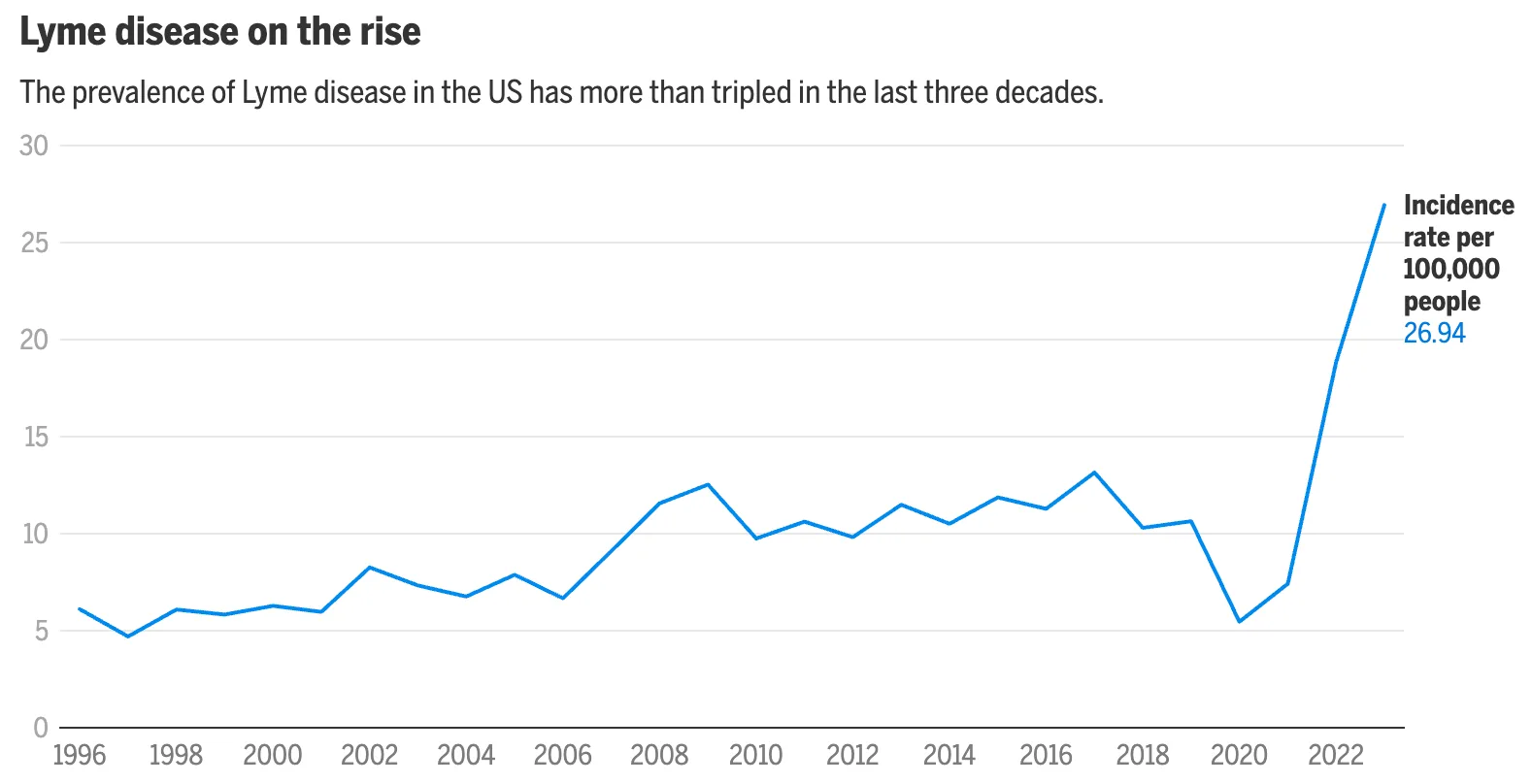
The fastest-growing disease in the US is also the only one without a "point solution": tick bites. There is only one way to prevent them: educating your employees with Quizzify. This post will cover the things our quiz teaches. You might look at the suggestions below and say, "Well, everyone already knows these." But if they did, you wouldn't see statistics like this one...
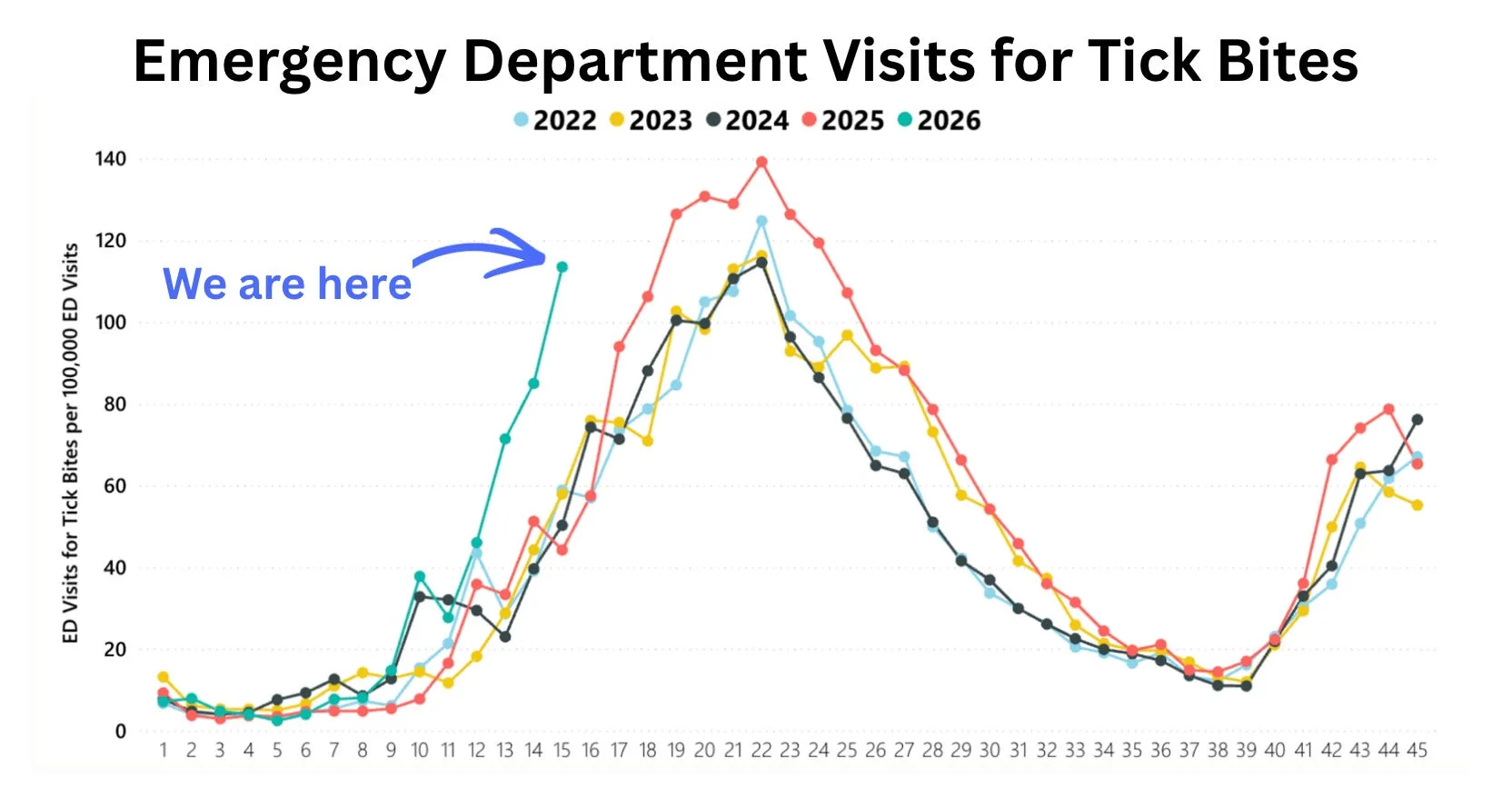
Or this one, on tick-related ER visits in 2026 vs. previous years:
Now that you've seen those stats, you can cut to the chase and contact us.
Employees who lack access to Quizzify have no idea how easy it is for ticks to attach to you. One highlight of our Ticks quiz is this brief video that shows exactly that: a real tick (not an actor) attaching to a real Quizzify employee (also not an actor, though he had ambitions in his youth). This video is a wake-up call for vigilance, starting with prevention because...
1. Prevention works best
One would think basic prevention techniques were well-known, but the disease incidence rate would suggest otherwise, so here goes:
-
Stick to the trails.
-
Avoid rubbing up against plants.
-
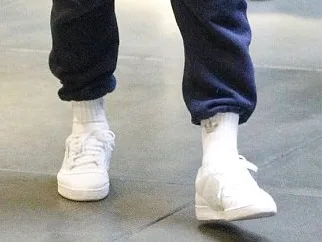
Wear long pants and tuck them into your socks. Not much of a fashion statement, but neither is a bullseye rash.
-
Wear light-colored clothing so that you can spot the ticks more easily, unlike the gentleman in the picture. (The rumor that wearing dark-colored clothing attracts fewer ticks is just that -- a rumor.)
-
Put clothes in a hot dryer for a few minutes after you hike.
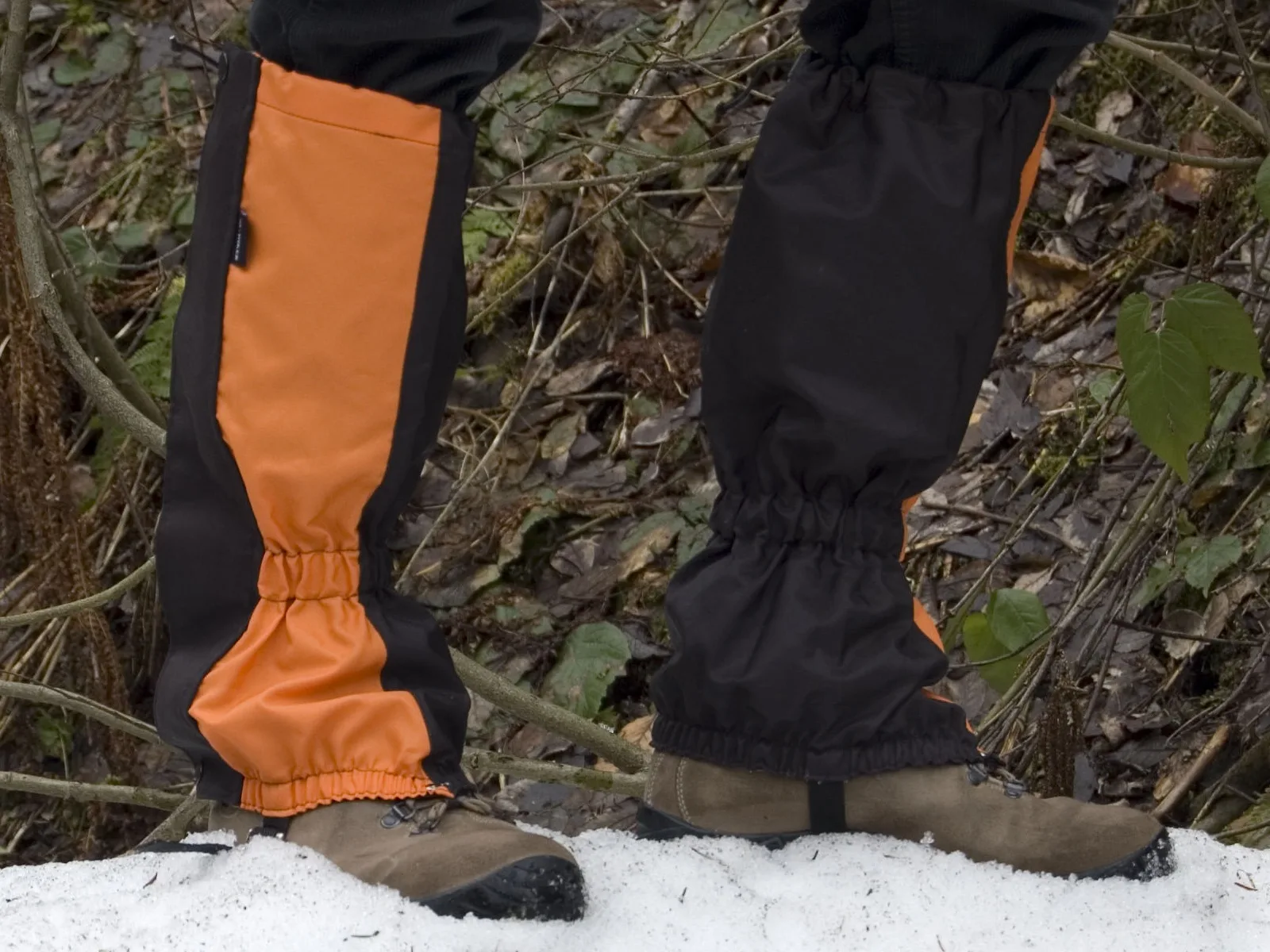
We rarely advise actions that require spending noticeable sums of money, but this may be an exception. Clothing claiming to prevent tick bites actually works, but only well enough to be a complement, not a substitute, for the prevention techniques above.
Further, there are now tick-prevention gaiters treated with that same chemical, permethrin:
2. Secondary prevention works second-best
Previously, we had said once or even twice a day in high season (which this is), do a check-for-ticks drill. Check your extremities (including between your toes) and your trunk. We can’t tell you exactly where else to check without losing our coveted G-rating, but, yes, check there too. Use a flashlight and a magnifying glass because the ticks that carry the most diseases are the small ones – the deer ticks and the larvae of the lone star ticks.
Speaking of lone star ticks (and we will, below), they don't need more than a few minutes to crawl to a spot and dig in, so checking every time you go out into the yard is not a bad idea.
3. There is a right and wrong way(s) to remove a tick
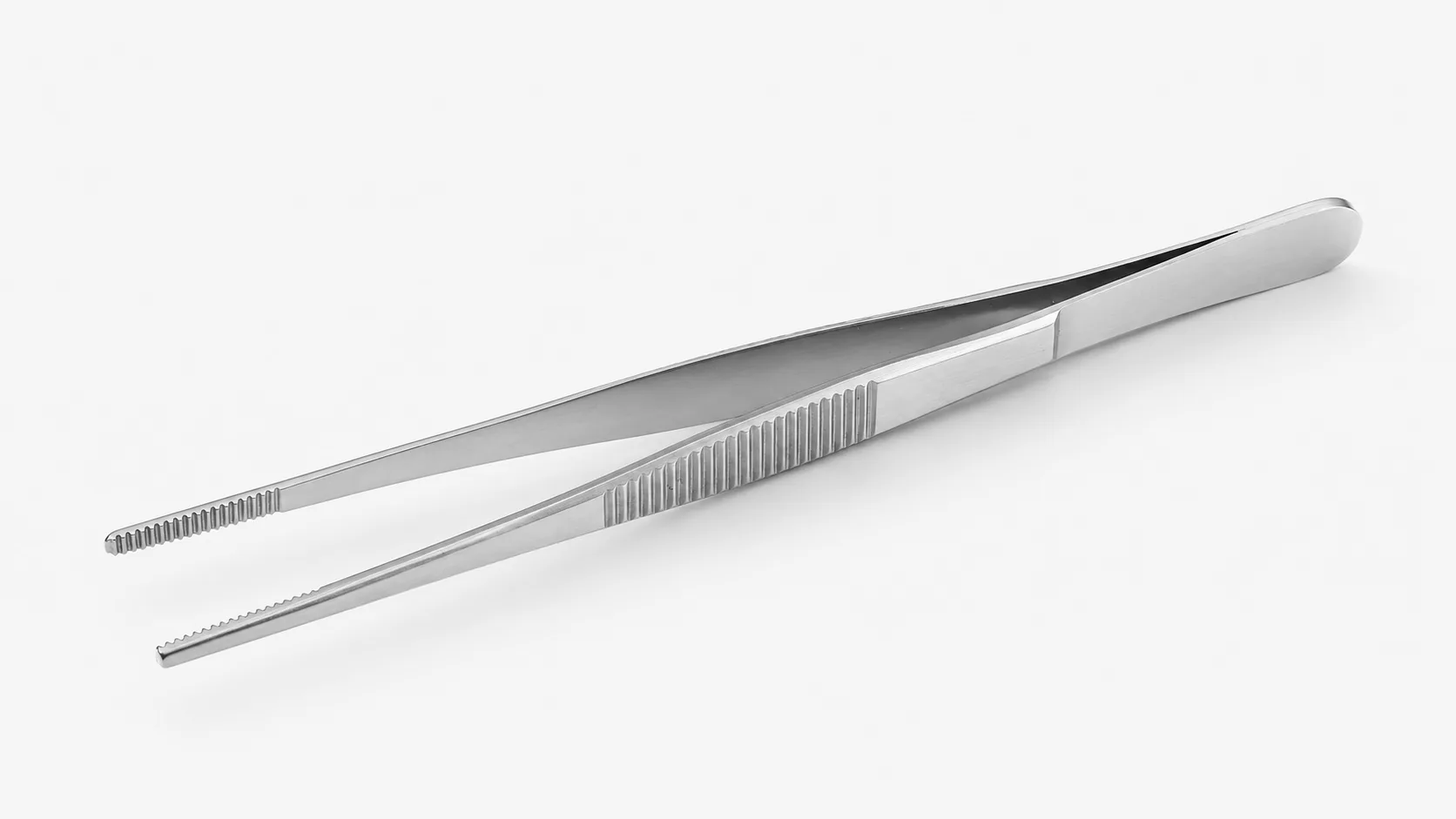
Urban legends abound here. Contrary to popular belief, you can’t smother them with Vaseline. Another popular idea is burning them off. However, as it turns out, ticks are not an exception to the general rule that very few of life’s problems can be solved by holding a match against your skin. Nor can you use regular tweezers. That might squeeze blood back into your body. Use tweezers designed to remove ticks from underneath, like this:
4. Keep the tick
If a tick has been attached to you, keep it. Chances are nothing is going to happen to you. Chances are also that if something does happen, the tick itself may not be of value. However, increasingly there are opportunities to diagnose tick-borne illnesses (of which there are 15 and counting) by examining the tick itself – though often these examinations are not covered by insurance.
We teach employees the mnemonic: "So you don't get sick/KEEP THAT TICK." Here is another mnemonic, from the Rutgers (NJ) Testing Labs:
5. Bullseye rashes may mean Lyme Disease, but Lyme Disease doesn't always start that way
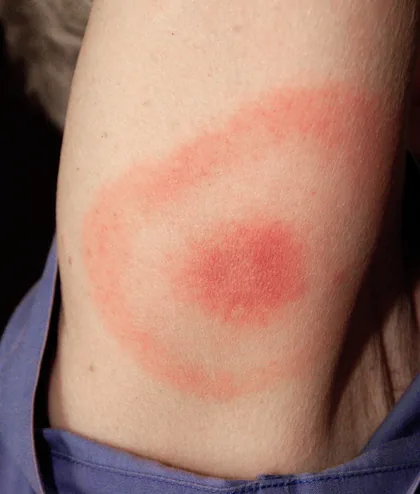
People look for a very distinctive bullseye rash, as well they should. If you have a bullseye rash, you may very well have Lyme Disease. However, there are many other tick-borne illnesses that present differently. Flu-like symptoms in mid-summer might be one example. Further, it is possible to contract Lyme Disease without ever seeing a bullseye rash.
6. Diagnoses are often wrong
Let us hope you never get this far, but diagnosing tick-borne illness is not one of medicine’s long suits. Lyme Disease itself probably generates more false positives and more false negatives than any other infectious disease in the country. You can be overdiagnosed with Lyme Disease without having it, or told “it’s nothing,” when it’s really something. Don’t assume the first test or first doctor is right. If you take the course of antibiotics for Lyme Disease and still don’t feel right, say something.
Postscript: The scariest-of-all tickborne illness
As though all this weren't enough reason to use Quizzify to engage your employees about ticks, here is one more:
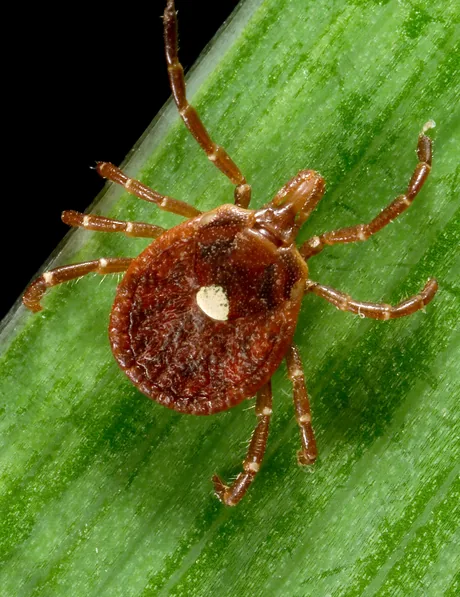
See that spot on the tick's back? That's a Lone Star Tick. This is the "newest" tick, which has spawned the newest and fastest-growing disease: Alpha Gal syndrome, an allergy to either red meat and/or dairy products. They transmit this disease when they bite, so the idea of doing a "check for ticks" every day doesn't work.
It is said to be incurable, but Quizzify finds promise in an inexpensive procedure called auricular acupuncture.
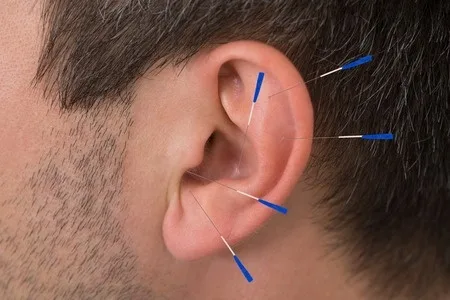
The process of auricular acupuncture
This single study showed excellent results in putting the allergy into remission. ("Remission" is not a cure, but close enough.) The caveat is that the study has "investigator bias" and "publication bias" because the investigators were acupuncturists, the publication is called Medical Acupuncture, and the solution is – get ready – more acupuncture. Nonetheless, Quizzify did receive two comments on our recent ticks quiz from players who said it worked for them and who presumably weren't also counted in the study. At the very worst, you'd be out a hundred bucks and slightly inconvenienced for a few weeks wearing a needle in your ear, much less obtrusively than shown above.
If your wellness program doesn’t provide employees with the advice they need for a safe summer (beyond “use insect repellent” and "avoid contact with tall grass"), perhaps you should add Quizzify to your benefits quiver?
Because wiser employees make healthier decisions…and healthier decisions save money.